Company News

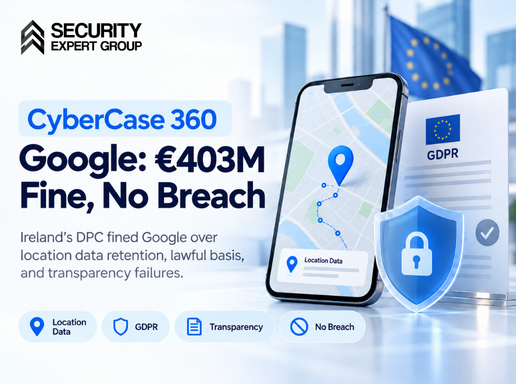
CyberCase 360 | Google Fined €403M Over Location Data Retention
Company News

CyberCase 360 | Google: €403M Fine, No Breach

Google Ireland was fined €403 million by Ireland’s Data Protection Commission — not because of a data breach, but because location data was retained longer than necessary, the lawful basis for processing could not be sufficiently demonstrated, and users were not clearly informed how their location data was used to infer interests and personalize advertising.
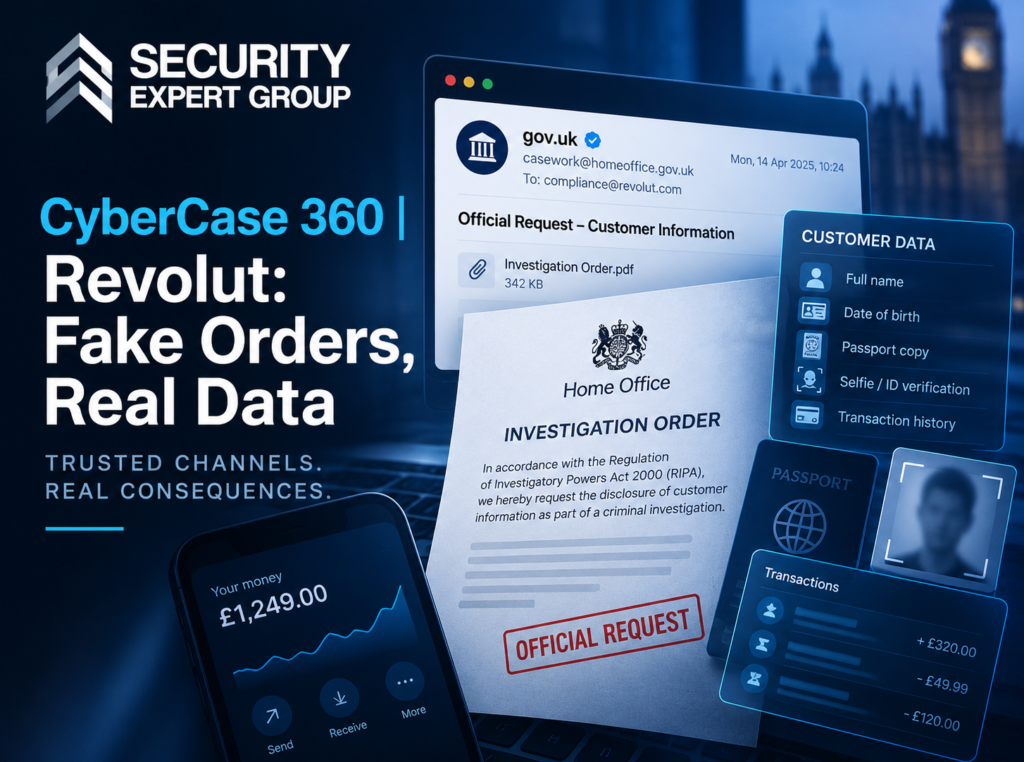
CyberCase 360 | Revolut: Fake Orders, Real Data
Company News

CyberCase 360 | Revolut: Fake Orders, Real Data

Attackers exploited a compromised Italian government mailbox to send forged European Investigation Orders to Revolut, leading to the disclosure of sensitive data belonging to around 680 customers.
The case shows why trusted domains and certified email alone are not enough — legal requests require independent verification, monitoring and clear approval controls

Pilot Program for Enhancing Cybersecurity Skills Gaps in Ukraine
Company News

Press release | Pilot Program for Enhancing Cybersecurity Skills Gaps in Ukraine Scales Up: 6 Universities, 2 Tracks, and Real-World Cyber Scenarios

The Pilot Program for Enhancing Cybersecurity Skills Gaps in Ukraine returns in 2026 at twice the scale, bringing together six Ukrainian universities and two practical training tracks: SOC Analyst and Cyber Threat Intelligence & Incident Response. Students and faculty will gain hands-on cybersecurity experience through bootcamps, CybExer cyber range training, CTF competitions and professional certification, while the developed programs will later be integrated into university curricula.

Berlin Refuses to Pay
Company News

CyberCase 360 | Berlin vs. Rhysida: NIS2 Gap Exposed

The Rhysida ransomware attack on Berlin exposed a seven-day gap between data exfiltration and network isolation, followed by the publication of stolen government data after Berlin refused to pay the ransom. The incident highlights critical weaknesses in detection, segmentation, MFA and incident response — and shows why public-sector organisations outside the mandatory NIS2 scope should adopt equivalent security controls voluntarily.

Scroll to Top